A part of FEV Group
Humanoid Robotics at FEV: The FEV Bot Innovation Program

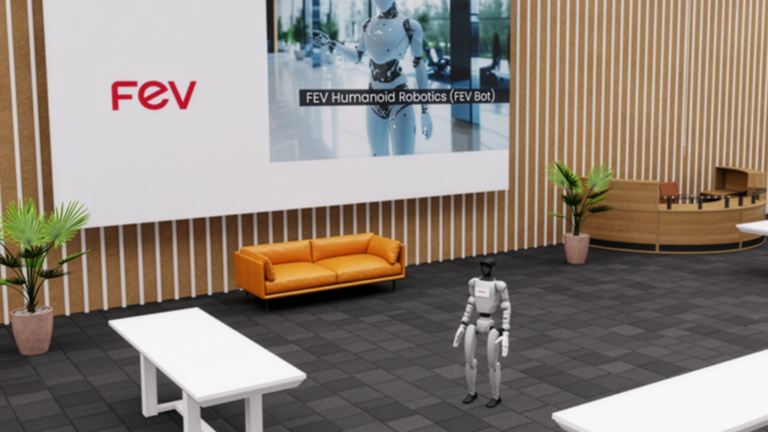
Learn how the FEV Bot innovation program combines humanoid robotics, AI, simulation, and functional safety to develop safe and reliable robotic applications.
A part of FEV Group

Learn how the FEV Bot innovation program combines humanoid robotics, AI, simulation, and functional safety to develop safe and reliable robotic applications.

Discover how FEV etamax combines Functional Safety and trustworthy AI to enable safer autonomous rover navigation for planetary exploration and other safety-critical industries.

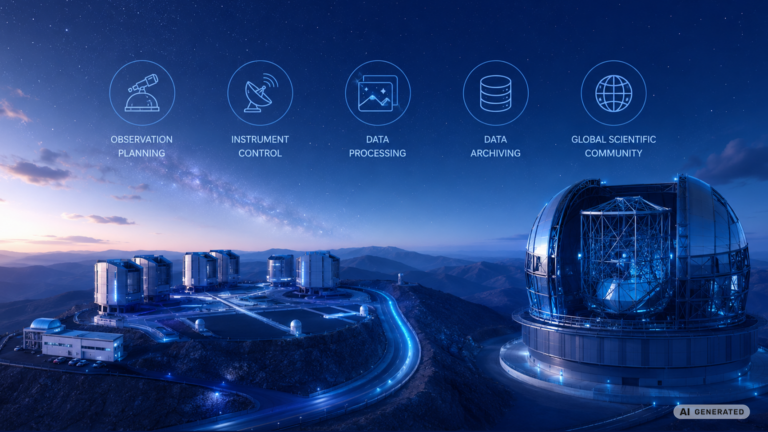
Modern observatories rely on more than mirrors. Learn how software supports observation planning, scheduling, data processing, and archiving at the European Southern Observatory (ESO), enabling scientific discovery from the Very Large Telescope to the upcoming Extremely Large Telescope.

Even millimetre-sized debris particles can threaten satellite missions at orbital velocities. Learn how FEV etamax uses ESABASE2 to assess debris risks, hypervelocity impacts, and environmental influences throughout spacecraft development.

Over the past 15 years, scenario-based approaches have become a key method for developing and validating CCAM systems. This paper highlights their evolution from rule-based to data-driven and AI-supported techniques, with insights from FEV.io’s work in major EU-funded projects such as L3Pilot, HiDrive, and Synergies.

Your requirements backlog is growing faster than your team can handle. Learn how AI in requirements engineering accelerates traceability, improves quality, and helps regulated engineering teams regain control and throughput.

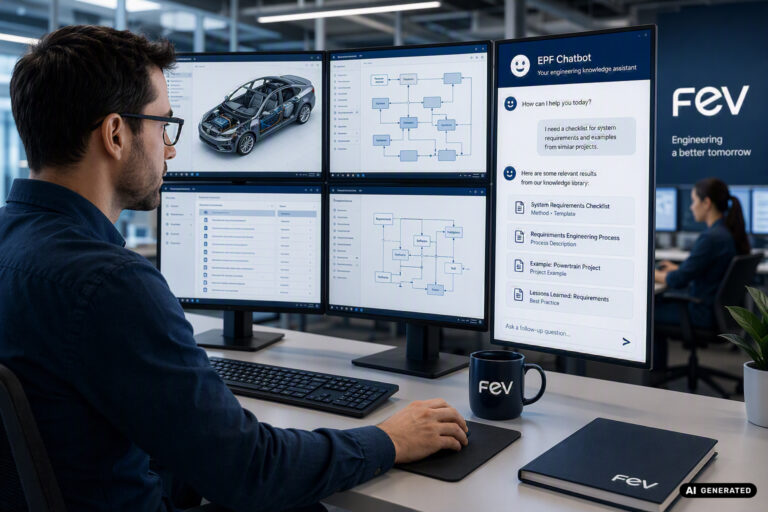
Engineering organizations lose up to 40% of development costs due to poor knowledge reuse and unstructured processes. The Engineering Process Framework (EPF) addresses this challenge by standardizing processes, enabling global knowledge access, and creating a solid data foundation for scalable AI and improved engineering efficiency.

AI agents are transforming systems engineering by automating requirements extraction, architecture modeling, and compliance workflows. By combining Systems-as-Code with MBSE copilots, organizations can recover legacy specifications, ensure traceability, and meet growing regulatory demands—while reducing engineering effort and accelerating development timelines.

An expert-driven Generative AI solution, the HARA CoPilotAgent enhances Functional Safety workflows by automating repetitive analysis steps while ensuring continuous expert validation. This approach significantly improves efficiency and consistency in hazard analysis without compromising the rigor required by ISO 26262.

The increasing connectivity and complexity of modern vehicles significantly raise cybersecurity risks, making comprehensive security measures across the entire vehicle lifecycle essential. The UN regulations R155 (Cybersecurity Management System) and R156 (Software Update Management System), mandatory for new vehicles from July 2024, require manufacturers to implement structured processes for vehicle security, risk management, and secure software updates.