A part of FEV Group
Your satellite vs. a millimetre-sized particle. Who wins?
Author -
FEV.io | FEV etamax
Published -
Reading time -
3 mins
A part of FEV Group
Author -
FEV.io | FEV etamax
Published -
Reading time -
3 mins
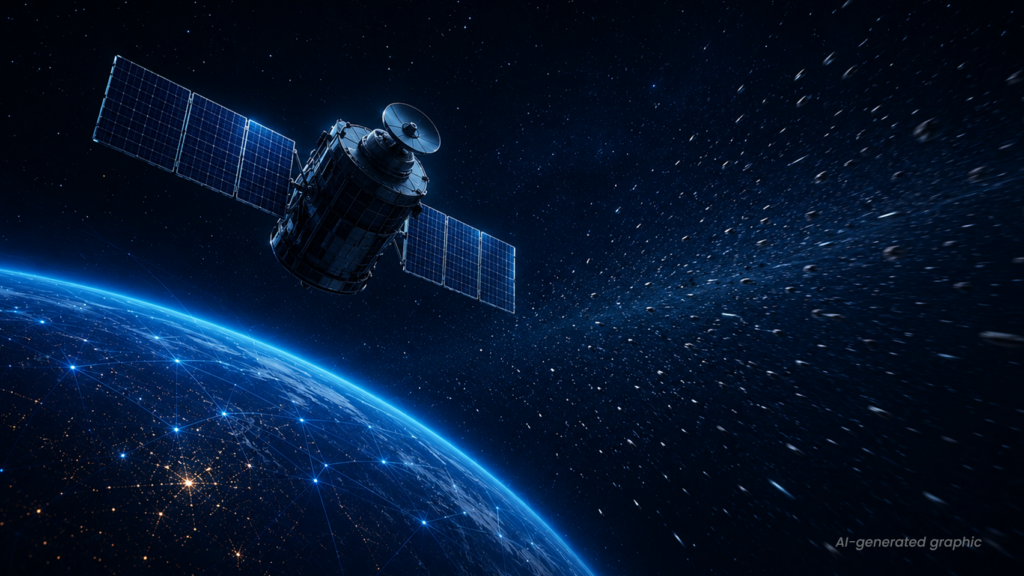
The space domain is becoming increasingly complex, and less forgiving. Growing numbers of satellites, more demanding mission profiles, and evolving regulatory requirements are changing how space systems are designed and operated. At the same time, the space environment itself introduces risks that must be understood early in the design process and monitored during operations.
Engineers and project managers need ways to make risks visible, quantify their impact, and support decision-making throughout the development process. At the same time, validation cycles are under increasing pressure, requiring faster results without compromising confidence.
FEV etamax, part of the FEV.io brand, supports companies, academic institutions, and agencies in addressing these challenges across different phases of system development.
One impact can be enough!
Understanding the space environment is a key prerequisite for designing reliable spacecraft. Even small particles can cause significant damage when moving at orbital velocities of around 28,000 km/h. Their impact depends on factors such as trajectory, orientation, and material properties, making early analysis critical.
A recent example of the effects of orbital debris is the delayed return of a trio of Chinese astronauts (taikonauts) after their spacecraft got hit by space debris, cracking a window in the process (What has happened to the damaged spacecraft at China’s space station? | Reuters).
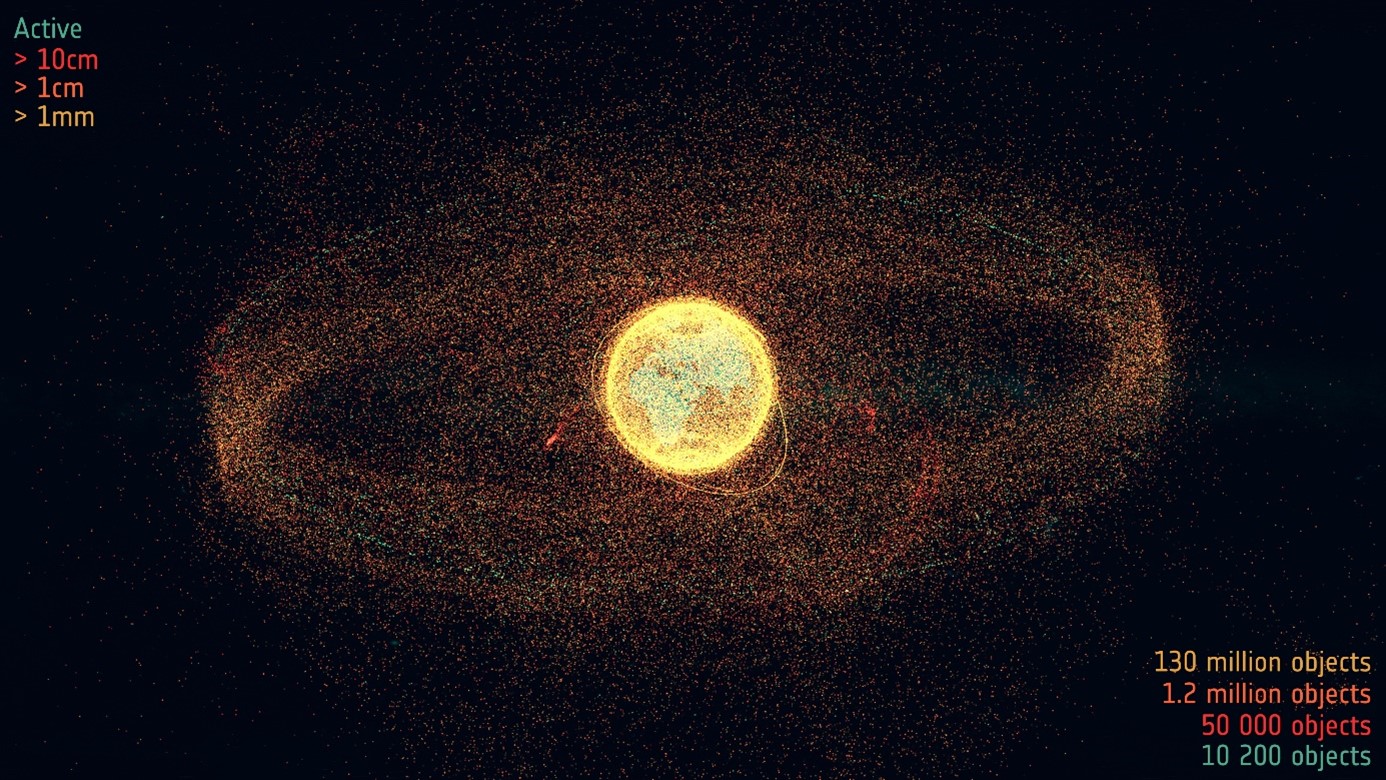
The number of objects in orbit continues to grow, from fragmented rocket parts to defunct satellites (ESA – ESA Space Environment Report 2025). This increasingly crowded environment can shift debris risk from a secondary consideration to an early design driver. Assessing exposure and understanding how environmental conditions influence spacecraft behaviour becomes a fundamental part of mission design.
This is where structured, tool-based analysis makes the difference.
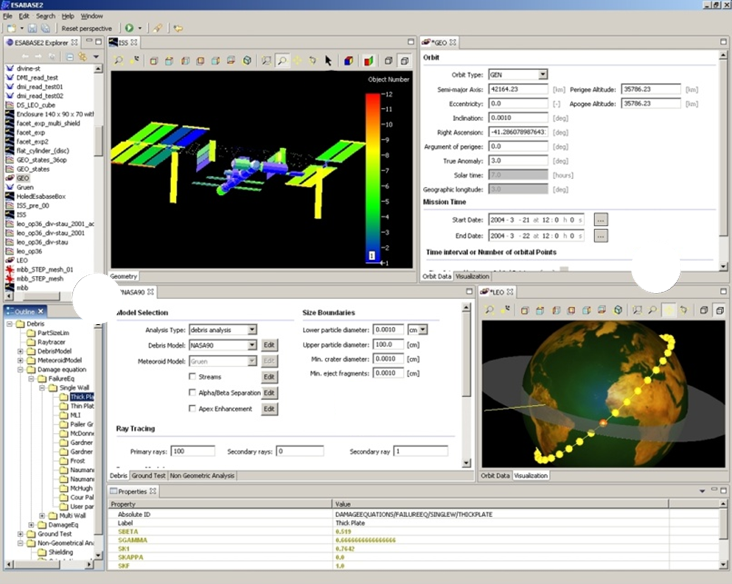
FEV etamax has been supporting this type of analysis since 2002, through its role in the development and maintenance of ESA’s ESABASE2 toolkit. It enables engineers to create a unified model of a spacecraft and its mission context, combining geometry, material properties, orbit, and attitude.
Engineers can assess how environmental factors interact, identify critical components, and compare design options early, when changes are still possible and cost-effective. Instead of treating risks in isolation, ESABASE2 provides a consistent view across debris impacts, atmospheric effects, contamination, and more. Uniquely, it contains both European Space Agency (ESA) and National Aeronautics and Space Administration (NASA) models and supports analyses for interplanetary missions.
Beyond the tool itself, FEV etamax applies its expertise directly to mission-specific challenges.
Hypervelocity impact studies, for example, focus on how debris interacts with spacecraft materials and what level of damage can be expected. These insights support early decisions on shielding concepts and component placement, where even small changes can significantly reduce risk.
Similarly, debris risk assessments for drag sails (deployable structures to deorbit a satellite more quickly after its mission has ended) contribute to more reliable deorbiting strategies, which are becoming increasingly important in a crowded orbital environment.
Satellite systems more broadly are analyzed with respect to how their geometry, orientation, and mission profile influence exposure to environmental risks over time. This allows engineers to identify critical areas, evaluate long-term effects, and adapt designs accordingly.
The question is no longer whether debris will influence your mission, but how early you account for it in your design. Early, credible analysis reduces uncertainty when it matters most.
Planning your next mission? Visit esabase2.net or contact etamax_esabase2@fev.io to learn how ESABASE2-based analyses can support your spacecraft design and reduce your risks.