A part of FEV Group
Big Science Software: How ESO Turns Astronomical Data into Discovery
Author -
FEV etamax
Published -
Reading time -
3 mins
A part of FEV Group
Author -
FEV etamax
Published -
Reading time -
3 mins
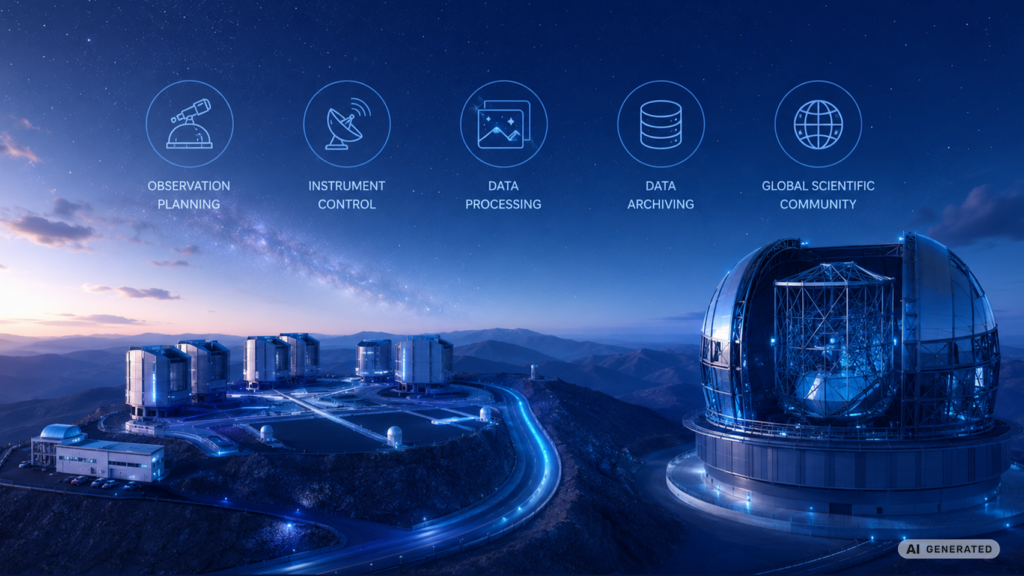
The world’s most advanced observatories rely on far more than mirrors alone. Every observation, schedule, data product, and archive depends on software that turns light from space into scientific insight.
In Big Science projects such as those led by the European Southern Observatory (ESO), Big Science software enables observation planning, instrument control, data processing, and data dissemination to the global research community.These systems must handle massive data volumes, integrate diverse technologies, and evolve over many years while remaining reliable.
Behind every breakthrough image of the universe is software that must work for decades.
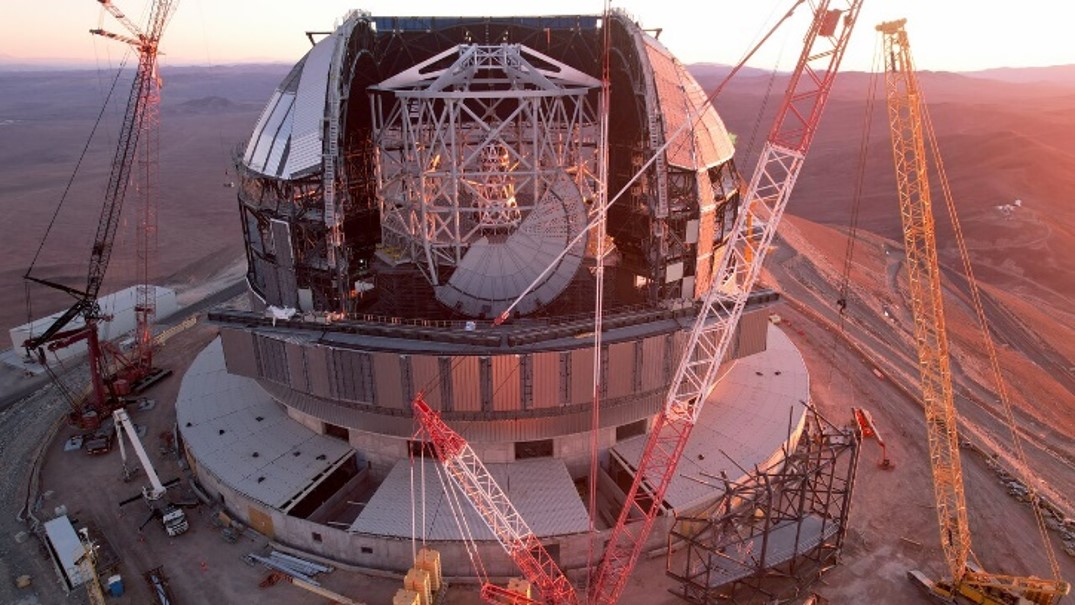
ESO operates some of the world’s most advanced astronomical facilities, including the Very Large Telescope (VLT) and the upcoming Extremely Large Telescope (ELT). These observatories rely on a wide range of software systems, from observation planning and scheduling to data processing pipelines and archive systems used by scientists worldwide.
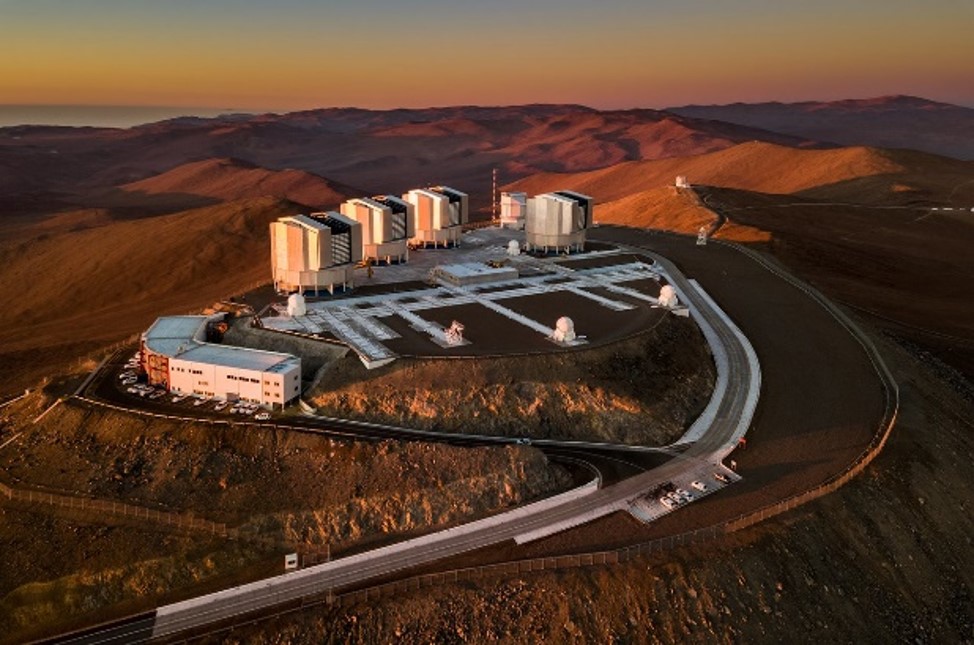
Modern observatories generate vast amounts of data and require software to support the full scientific workflow, from proposal preparation and observation planning to calibration, data reduction, and analysis.
This creates a unique set of challenges:
In this context, software is not just a supporting function. It is a core enabler of science.
Since 2018, FEV etamax, part of the FEV.io brand, has supported ESO’s data flow software by developing, operating, and maintaining systems for proposal preparation, observation scheduling, and archiving.
When a scientist wants to investigate a research question, they can submit a proposal for an observation with the VLT and, in future, the ELT. They enter all required information through an online platform for review by ESO.
If the proposal is accepted, the observation must be scheduled against hundreds of parameters, including instrument settings, visibility constraints, and other planned observations. Software enables this complex scheduling process and makes it operationally feasible.
After collection, the data must be archived, processed into usable data products, and made available to the scientific community through interconnected software systems.
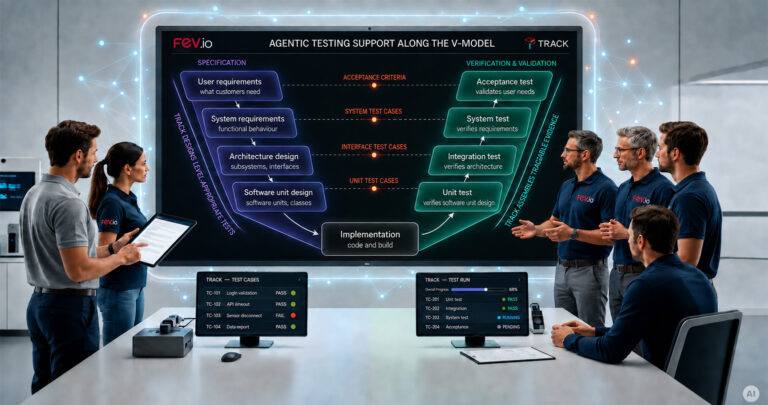
In the background, automated software testing supports test specification, implementation, execution, result evaluation, reporting, and issue tracking.
In Big Science, the challenge is not only to build software that works, but to sustain it across decades of evolving requirements, technologies, and scientific goals.
Even well-established platforms, such as ESO’s data flow systems, face challenges from increasing data volumes, new data formats, and ageing architectures that need to be modernized without disrupting ongoing operations.
The result is a continuous balancing act between innovation and stability. New capabilities must be introduced while ensuring that scientific output remains consistent and reliable.
The earlier software architecture, validation strategies, and testing approaches are addressed, the easier it becomes to scale systems and adapt them over time.
Complex software systems need to evolve without losing reliability. Whether in Big Science, space, or another mission-critical domain, FEV etamax supports teams across the full lifecycle, from requirements and architecture to testing, operation, and long-term evolution. Visit our website to learn more, or contact us to discuss how we can support your mission-critical software lifecycle.