A part of FEV Group
UN R155/156: Challenges for Automotive Cybersecurity
Author -
Dr. Miao Zhang, Dr- Matthias Rehberger
Published -
Reading time -
8 mins
A part of FEV Group
Author -
Dr. Miao Zhang, Dr- Matthias Rehberger
Published -
Reading time -
8 mins

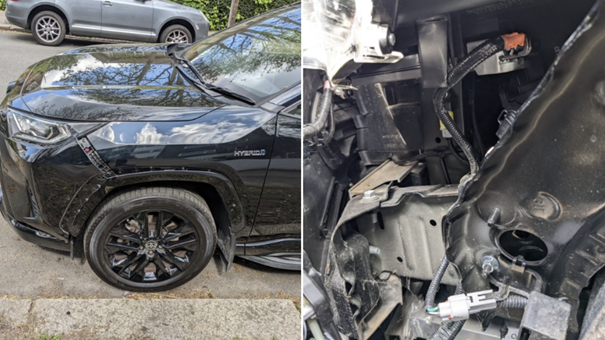
Modern vehicles may contain up to 150 connected electronic control units (ECUs) and 100 million lines of software codes [1], herein the growing complexity and connectivity pose significantly increasing cybersecurity risks. To motivate our point, we briefly discuss a real-world example (see Figure 1), where vulnerabilities within a vehicle were exploited by attackers to steal the vehicle. This attack was analyzed in a technical blog [2] by Dr. Ken Tindell. He explained how the attacker used a Controller Area Network (CAN) injector looking like a JBL Bluetooth speaker to steal the vehicle by performing a CAN injection attack through the headlight. The attacker connected the CAN injector to the wiring of the headlight and injected fake CAN messages of ‘key validated’, mimicking genuine messages from the smart key receiver. This fake message was then transferred to the engine control unit to deactivate the immobilizer and after that a fake message was sent to the door ECU to unlock the doors. In less than two minutes, the car was stolen. This attack was successful due to, e.g., the lack of suitable authentication controls.
Driven by the dramatically increasing cyber threats, the World Forum for Harmonization of Vehicle Regulations (WP.29), which is a Working Party within United Nations Economic Commission for Europe (UNECE), released the regulation No.155 (UN R155) [3] and No.156 (UN R156) [4] in 2021. The goal of WP.29 is to develop worldwide harmonized vehicle regulations mainly aiming at improving vehicle safety, environment protection, energy efficiency, anti-theft performance and security. The UN R155 contains the uniform provisions concerning the approval of vehicles with regards to cybersecurity and cybersecurity management system (CSMS), whereas the UN R156 consists of those with regards to software update and software update management system (SUMS).
The date of entry into force for both regulations (UN R155 and UN R156) is on 22 January 2021. More specifically, in the applying countries from July 2022, the regulations are mandatory for all new vehicle types; and from July 2024, the regulations are mandatory for all new vehicles. That means, both Original Equipment Manufacturers (OEMs) and suppliers shall adhere to the requirements from such regulations from July 2024.
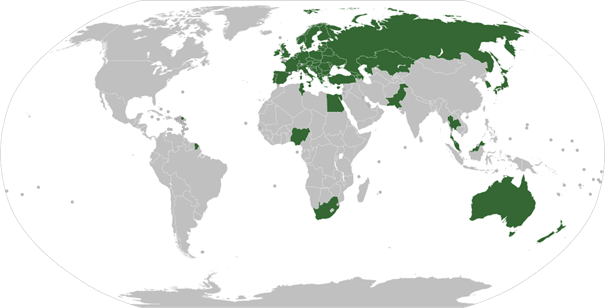
The UN R155/R156 apply to countries participating the WP.29 1958 Agreement. As shown in Figure 2, the contracting parties to the 1958 Agreement mainly include Europe Union countries, Japan, South Korea, and Australia [5]. The regulations are legally binding, which means for the vehicle manufactures selling the vehicles in these countries the requirements in the regulations are mandatory to be complied with for vehicles to be type approved.
The UN R155 applies to vehicles within the following categories:
The UN R156 applies to vehicles within the following categories which permit software updates:
The primary requirements of the two regulations are listed in Paragraph 7 (named as specifications) [3] [4] and consist of two parts: 1) requirements for the CSMS in R155 (for the SUMS in R156) where the vehicle manufacturer shall demonstrate the organizational structure, roles/responsibilities, processes and security governance, and 2) requirements for vehicle types.
R155 – Selected CSMS and vehicle type requirements:
R156 – Selected SUMS and vehicle type requirements:
The introduction of R155 and R156 requirements brings several challenges from both technical and organizational perspective.
From a technical perspective, the challenges include:
From an organization perspective, the challenges include:
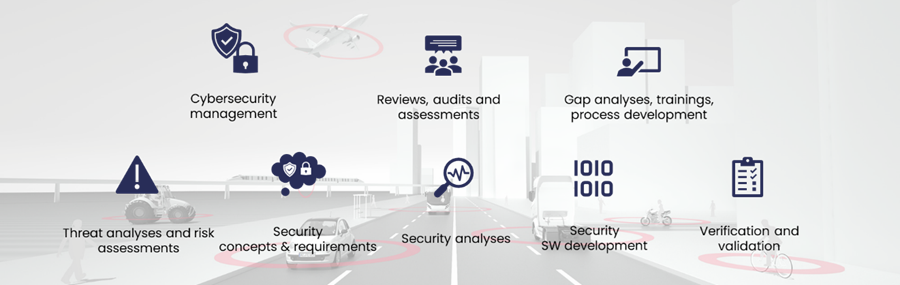
Figure 3 illustrates the core cybersecurity competencies at FEV.io. Specifically, our cybersecurity team may support you with the following activities:
[1] UN Regulations on Cybersecurity and Software Updates to pave the way for mass roll out of connected vehicles | UNECE, last visited on 6 March 2026.
[2] CAN Injection: keyless car theft | Dr. Ken Tindell, last visited on 6 March 2026.
[3] United Nations Economic Commission for Europe, “UN Regulation No. 155 – Cyber security and cyber security management”, https://unece.org/sites/default/files/2023-02/R155e%20%282%29.pdf, 4 March 2021.
[4] United Nations Economic Commission for Europe, “UN Regulation No. 156 – Software update and software update management system”, https://unece.org/sites/default/files/2024-03/R156e%20%282%29.pdf, 4 March 2021.
[5] United Nations Economic Commission for Europe, “Status of the Agreement, of the annexed Regulations and of the amendments thereto – Revision 32”, ECE-TRANS-WP.29-343-Rev.32.pdf (unece.org), 29 February 2024.
[6] File:World Forum for Harmonization of Vehicle Regulations.svg – Wikimedia Commons, last visited on 6 March 2026.
Interested in implementing UN R155/R156 requirements or improving your vehicle cybersecurity processes? Contact the FEV.io cybersecurity team to learn how we can support you. solutions@fev.io
Authors:
Dr. Miao Zhang
Dr. Matthias Rehberger